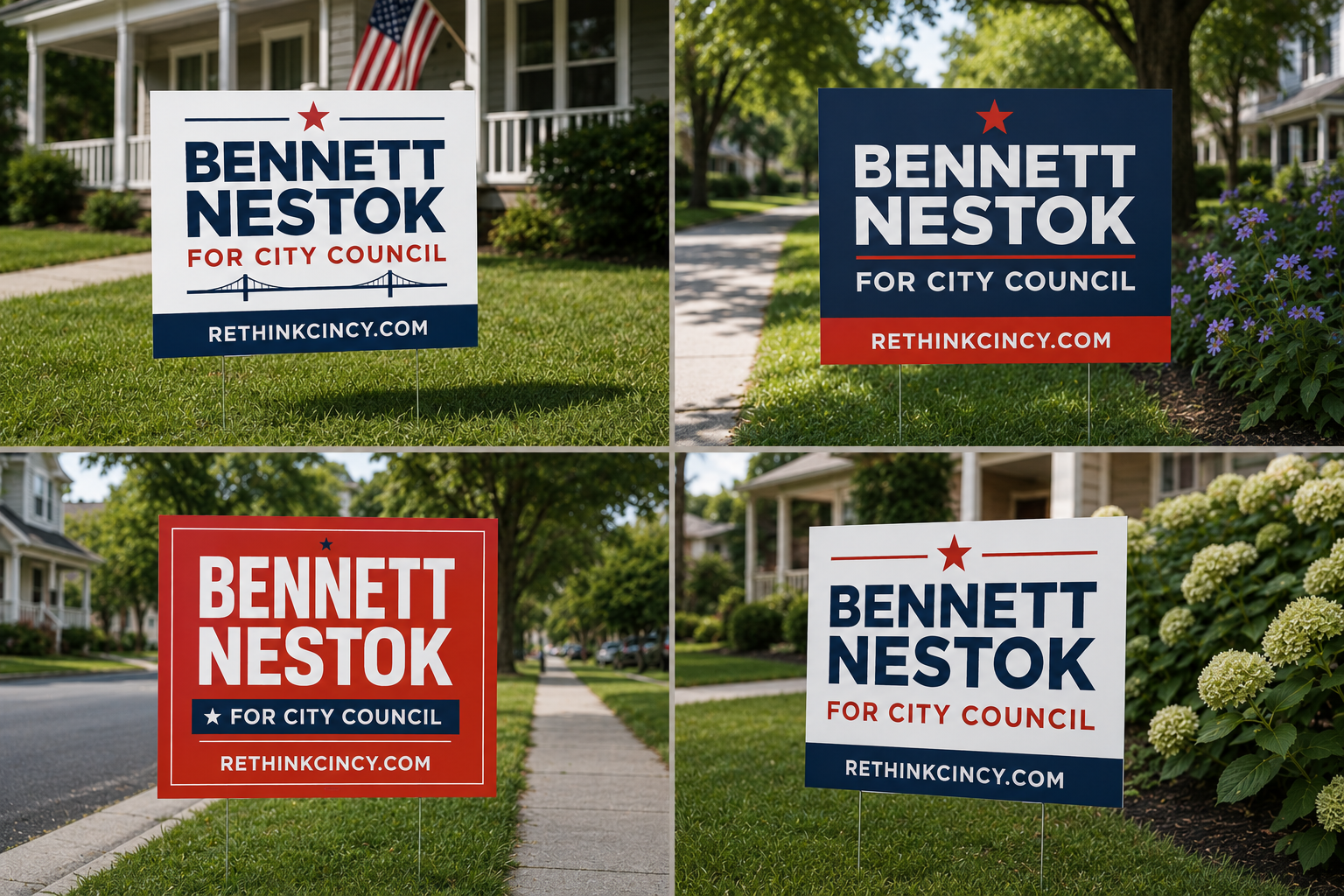
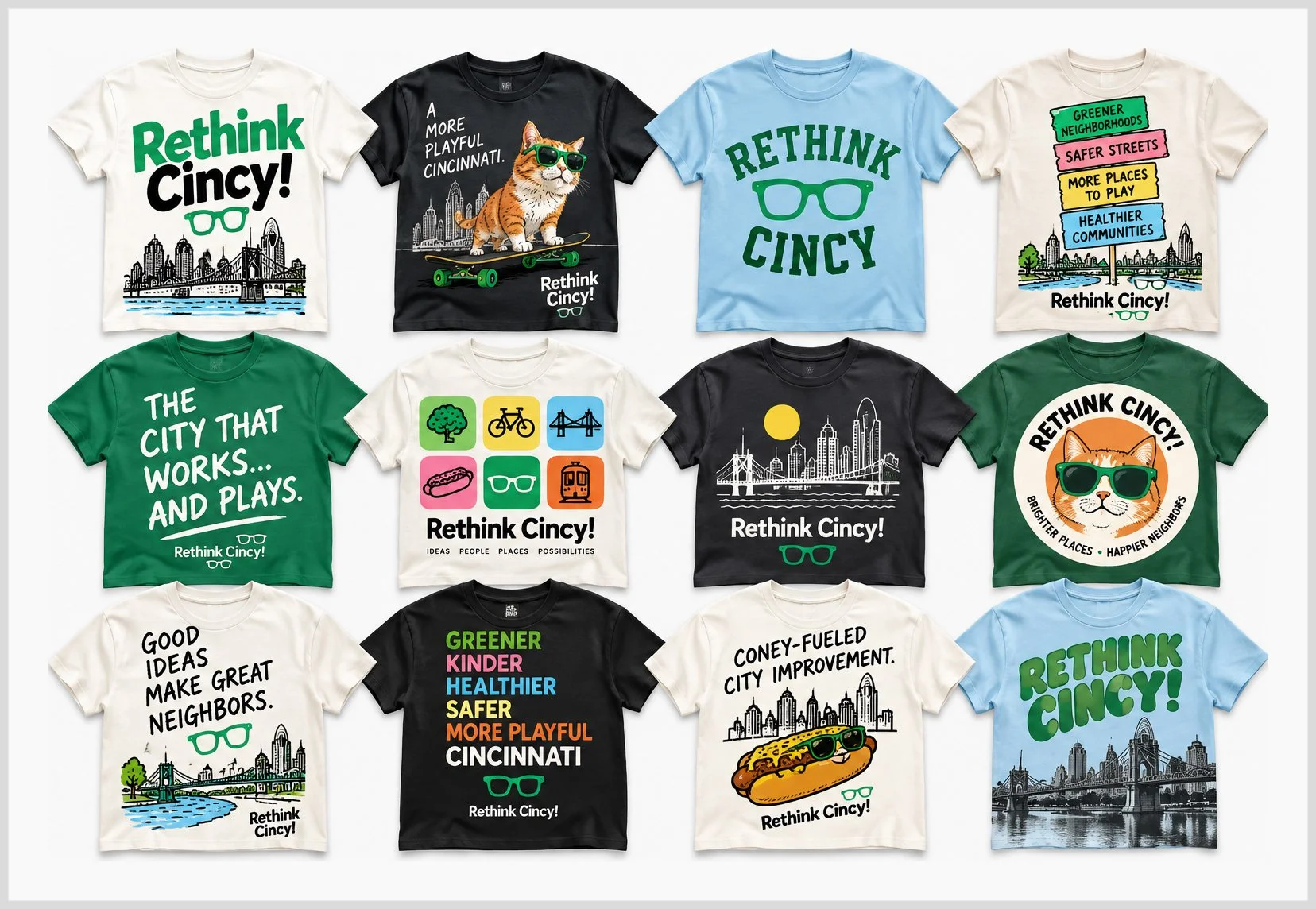
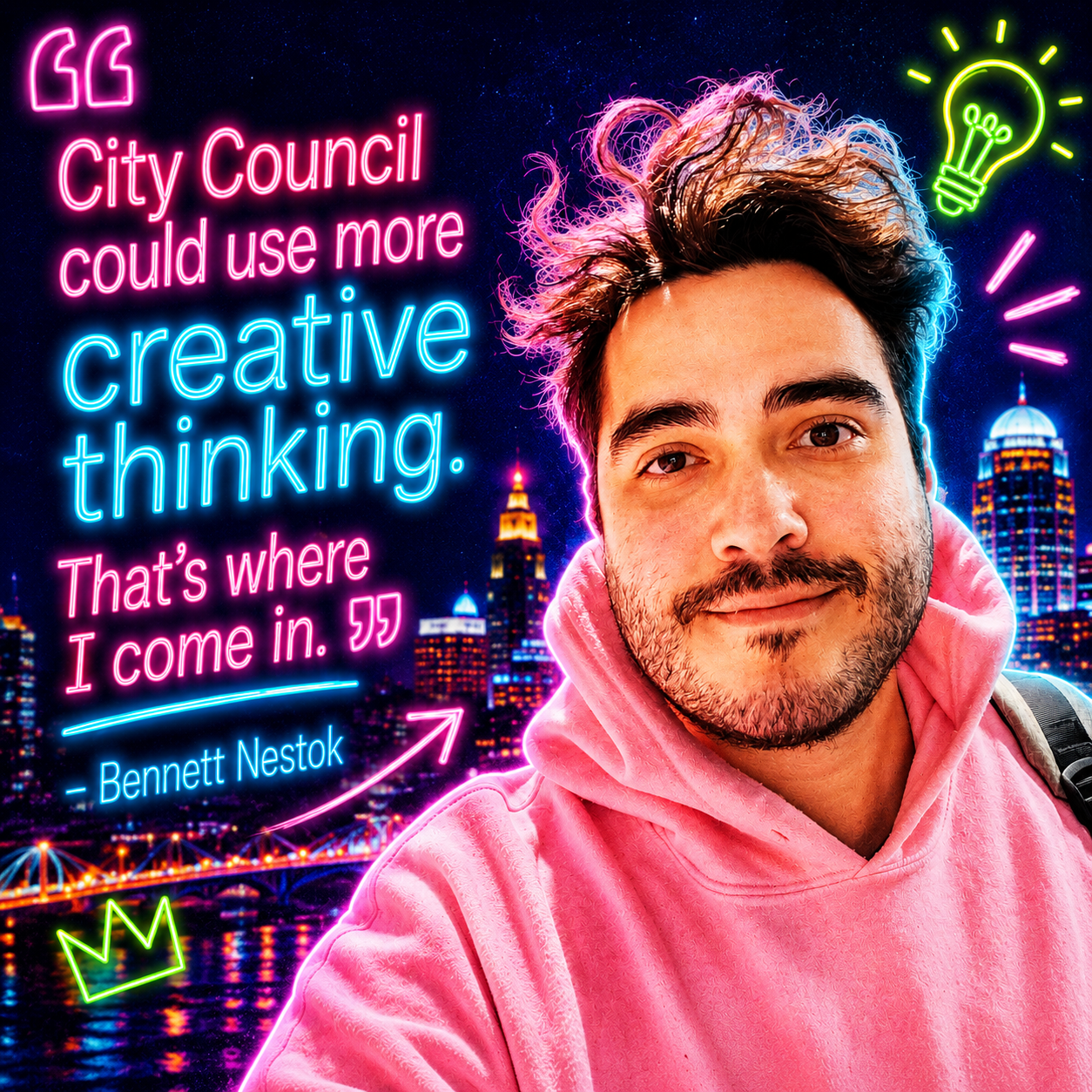
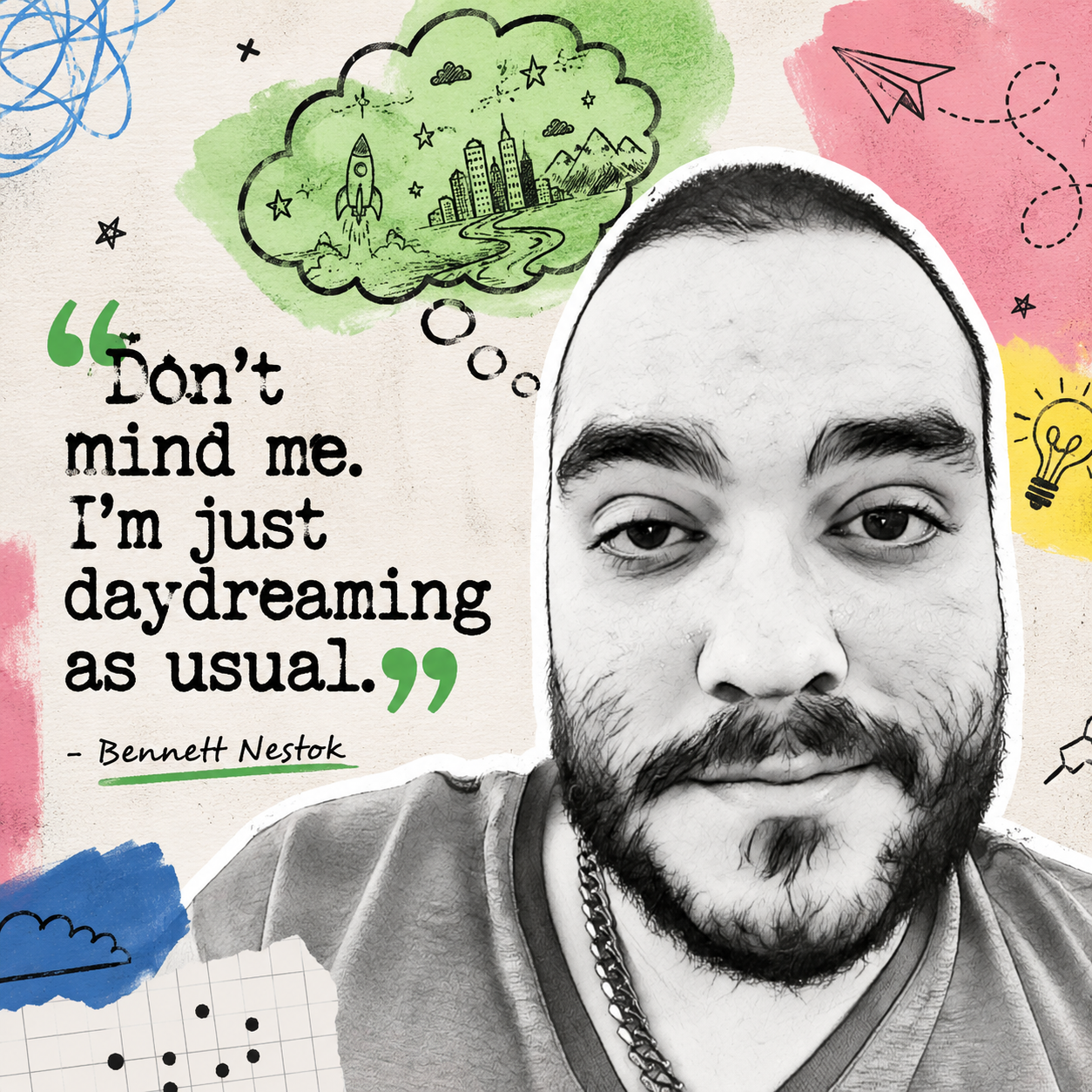
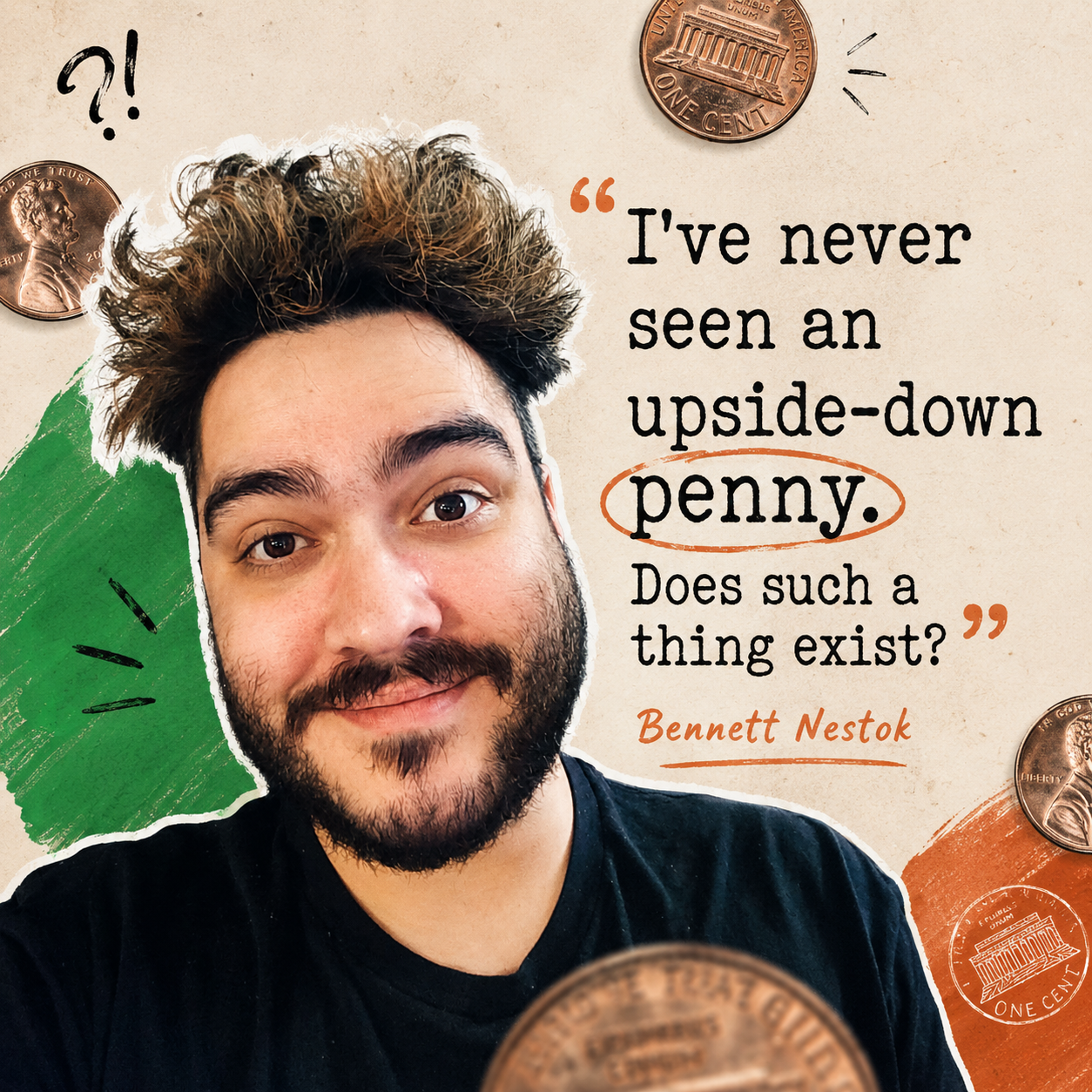
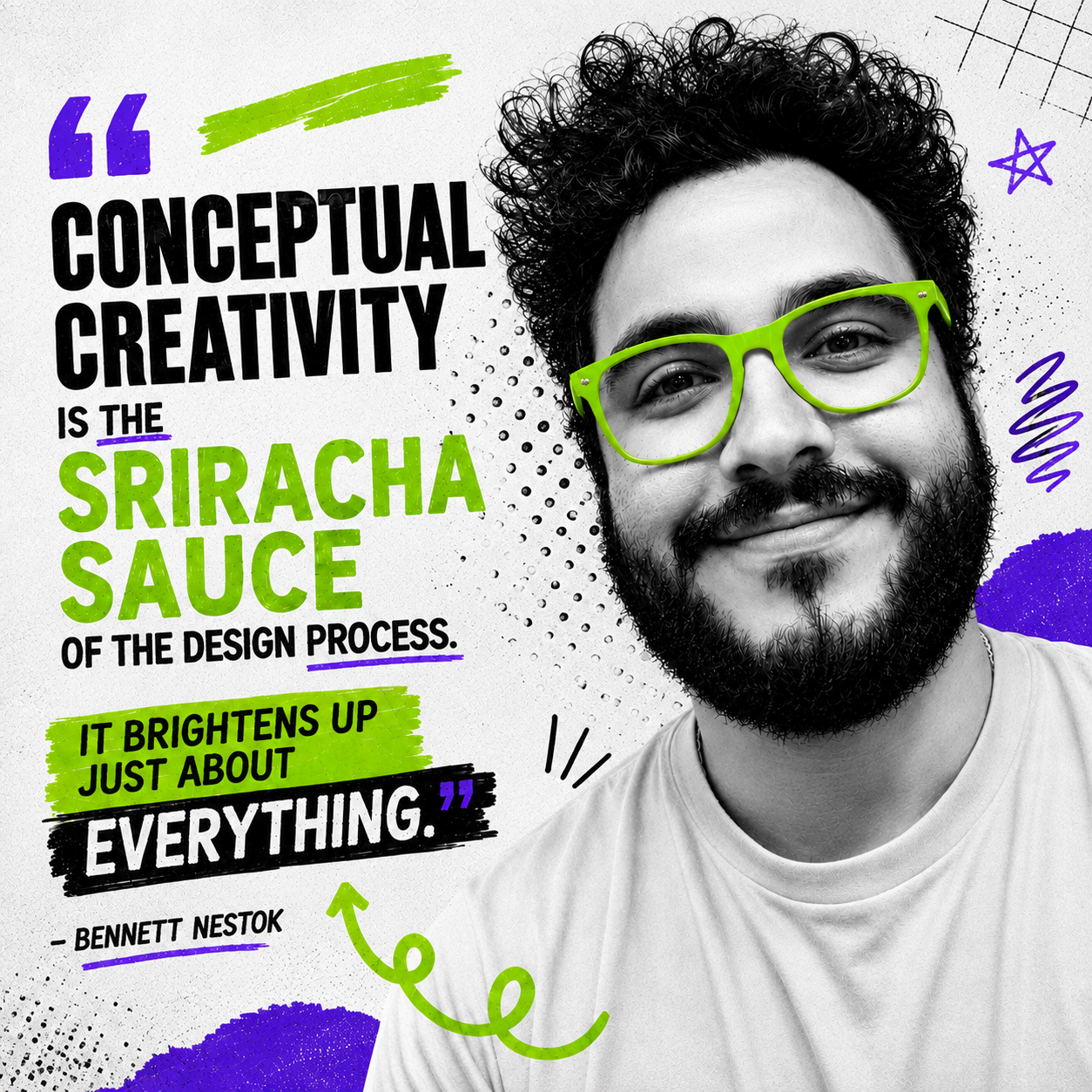
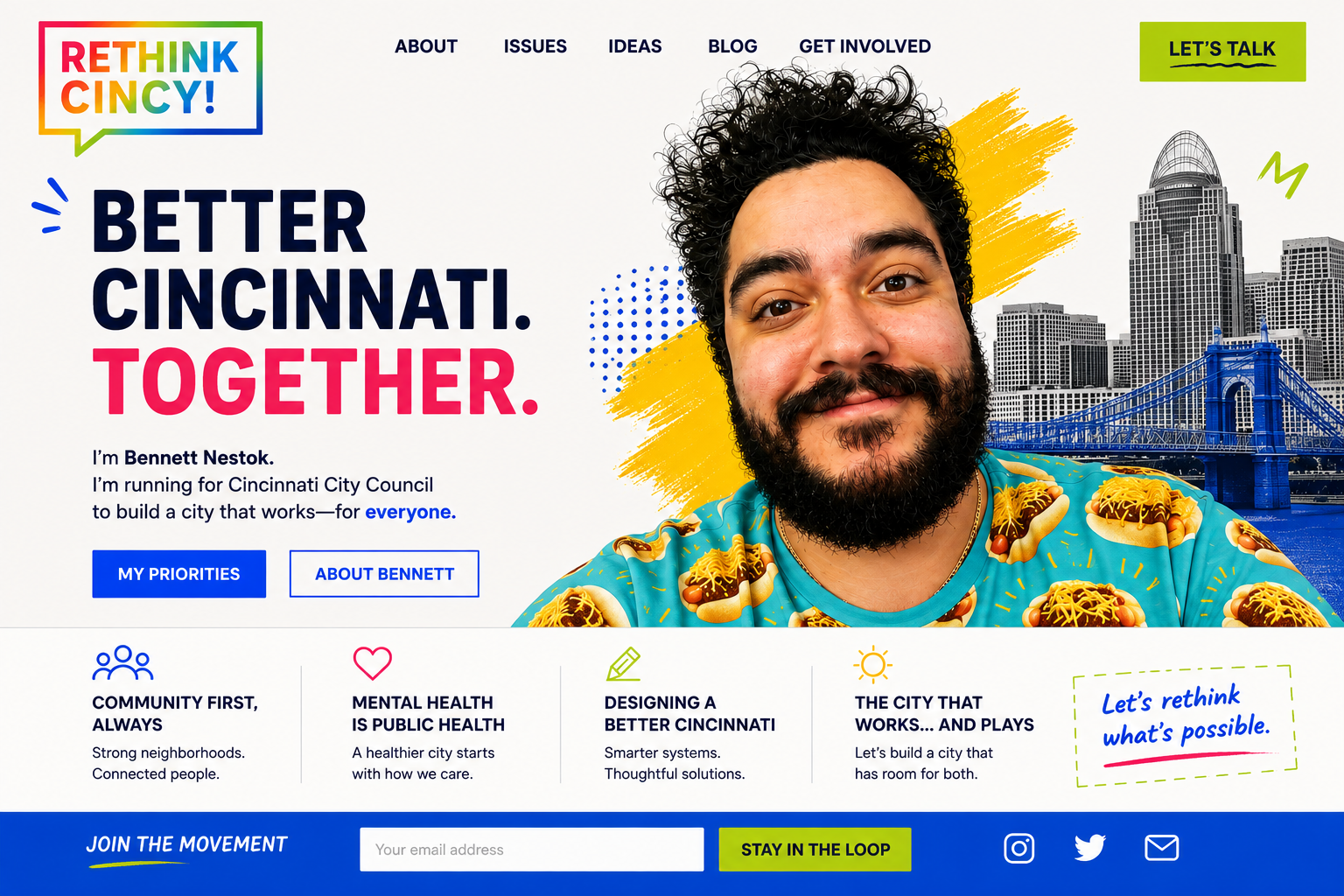
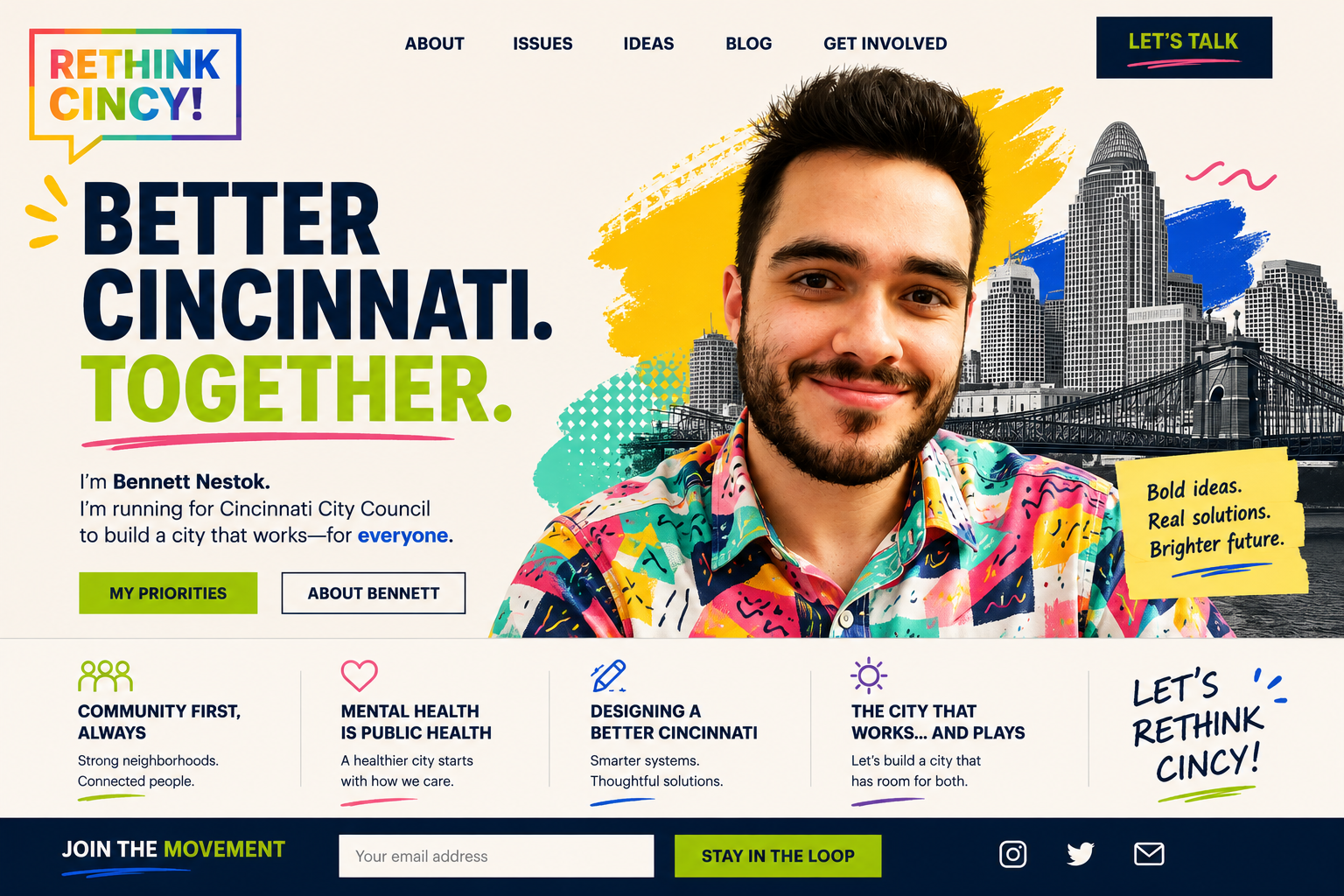
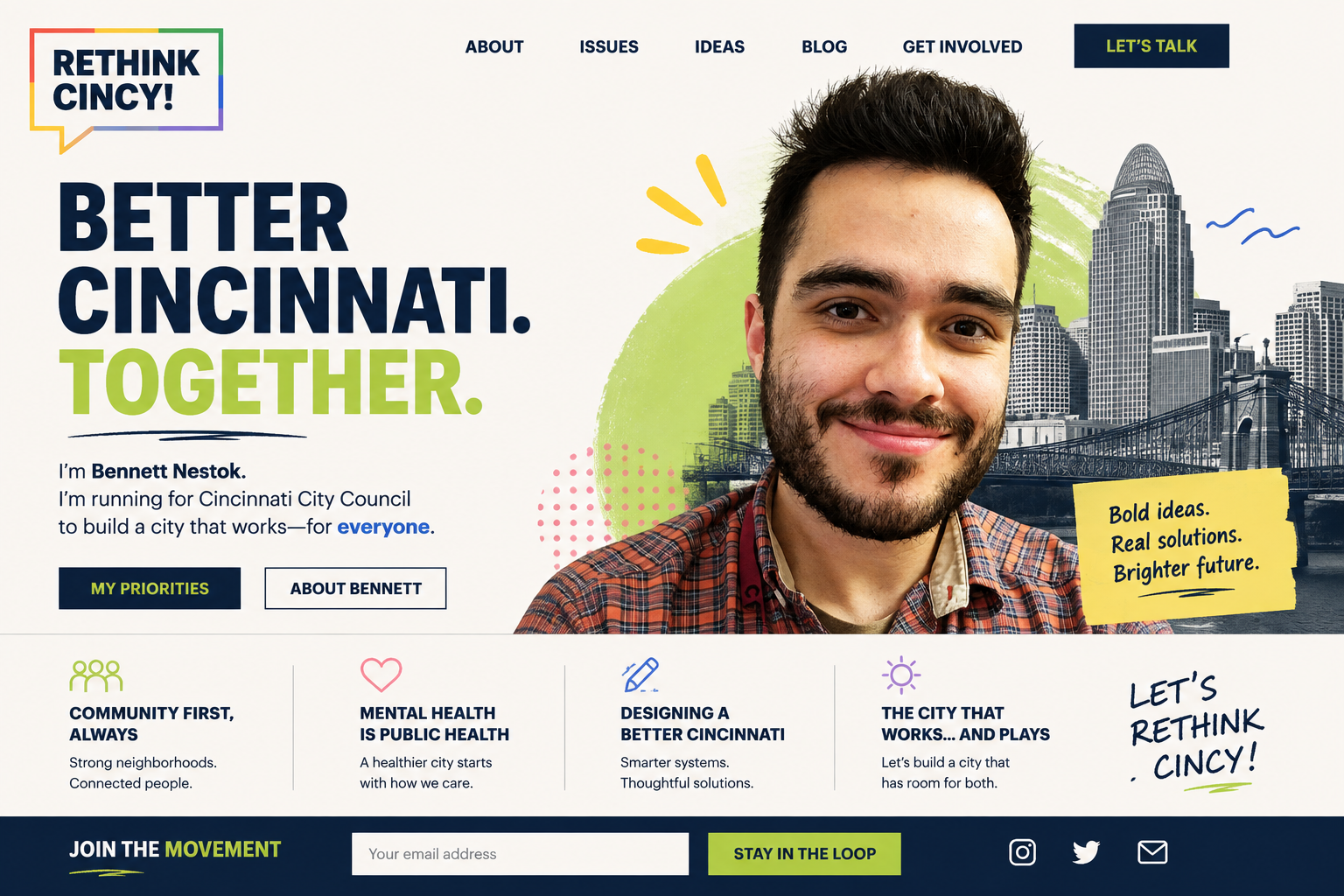
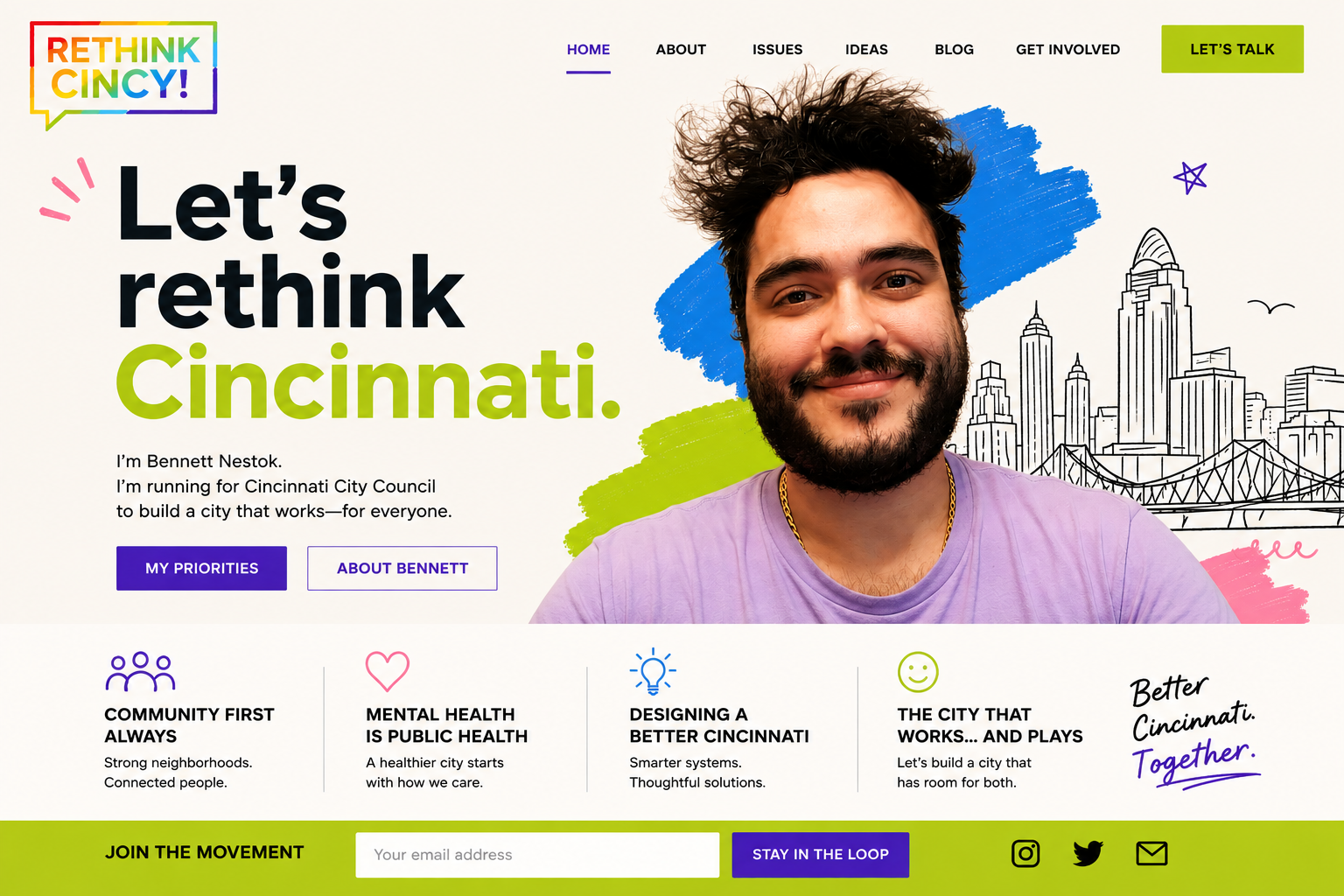
Ideations 5 through 8
Ideations 9a through 9c: connectable pins
Ideations 1 through 4
Ideations 5 through 8
Ideations 9a through 9c: connectable pins
I wear green for more than just St. Patrick’s Day.
I wear it for the green hills of the Queen City, for the strange and beloved swirl of (occasionally) green Skyline chili, and for the idea that Cincinnati can keep growing without losing what makes it ours.
Green is the color of new ideas, fresh starts, bold experiments, and the belief that we don’t have to settle for how things have always been. It’s a signal that we can build a city that’s more creative, more open, and more alive.
In Cincinnati, green isn’t just tradition. Green is possibility.
Join me in rethinking our home!
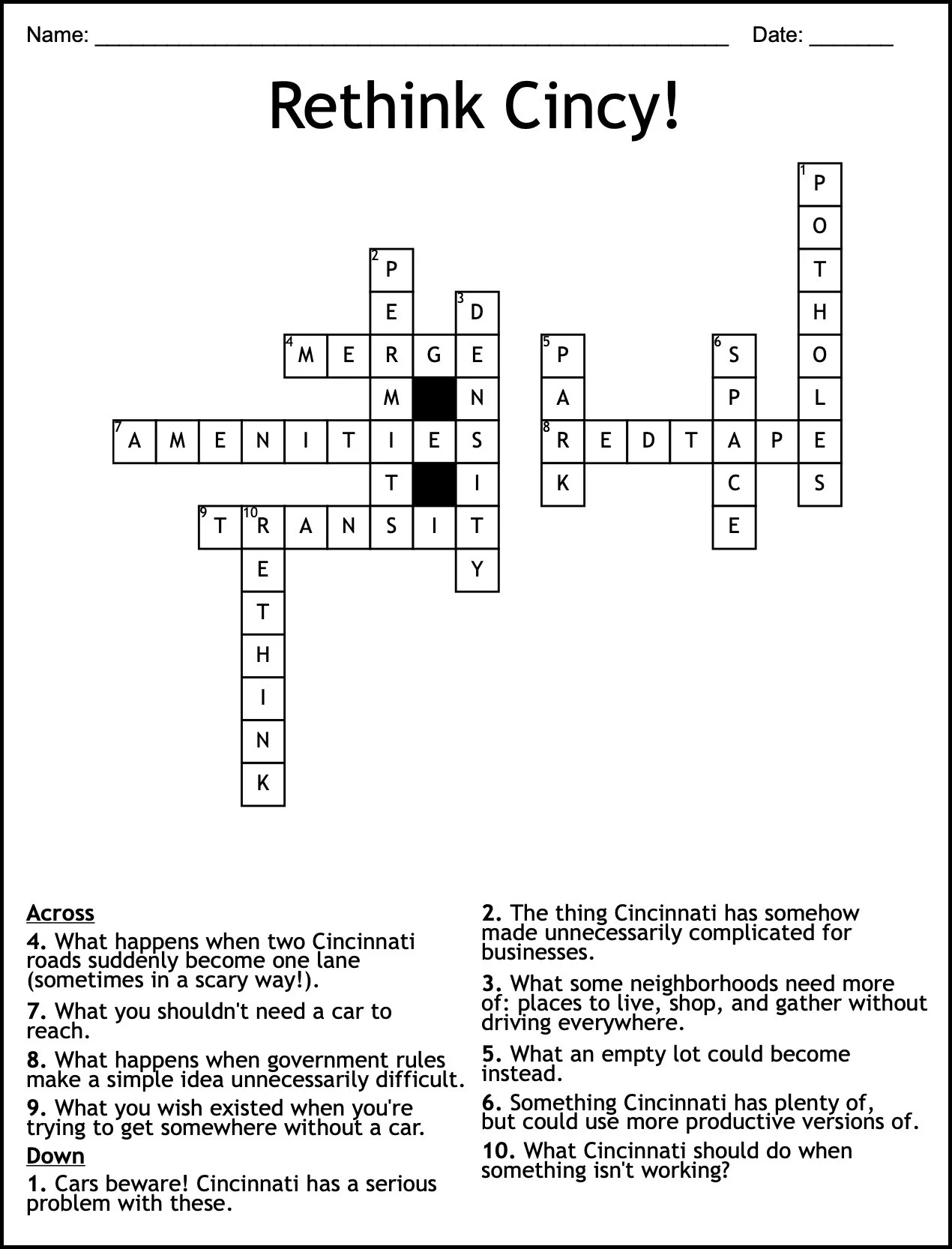
“Small businesses are what give cities character. 48-hour business permit rule – streamline licensing so most small businesses can open in under 2 days. Low-cost micro-retail spaces in vacant storefronts ($300–$600/month starter leases). Food truck and pop-up freedom zones downtown and in neighborhoods. Tax incentives for locally owned businesses, not just large developers. Homeschool co-op resource centers in libraries and community centers. Public access labs/workshops (science labs, woodworking, robotics). Homeschool sports leagues that partner with city parks. Educational micro-grants for alternative education programs. Legalize backyard chickens, bees, and small livestock in more neighborhoods. Expand urban gardens and edible landscapes in parks. Allow small neighborhood farm stands without heavy permits. Support local dairy and raw milk access through state partnerships. Convert vacant lots into community farms or orchards. Expand mental health response teams alongside police. Crack down on repeat violent offenders while prioritizing prevention. Expand mountain bike and hiking trails. More river access for kayaking and paddleboarding. Create urban adventure parks (skateparks, climbing walls, pump tracks). Build scenic overlooks and park improvements.”
“Cincinnati can improve by continuing to invest in safer and more reliable public transportation, making it easier for residents to commute without depending heavily on cars.”
“I’m just a firm believer in investing in the youth and community programs. And more quality across neighborhoods. I’ve noticed that Cincinnati is growing, but I believe that growth needs to work for everyone... not just a few select neighborhoods.”
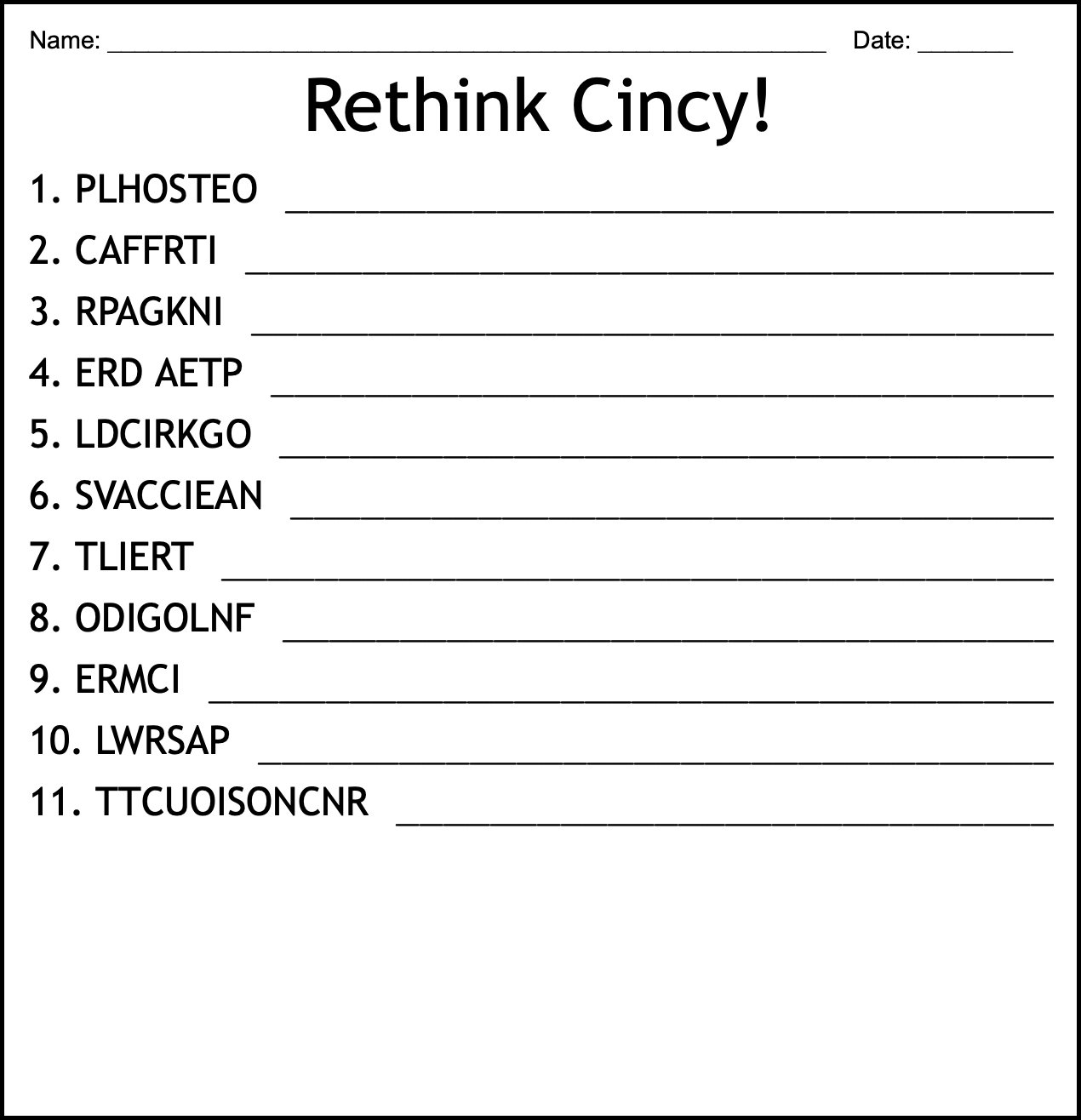
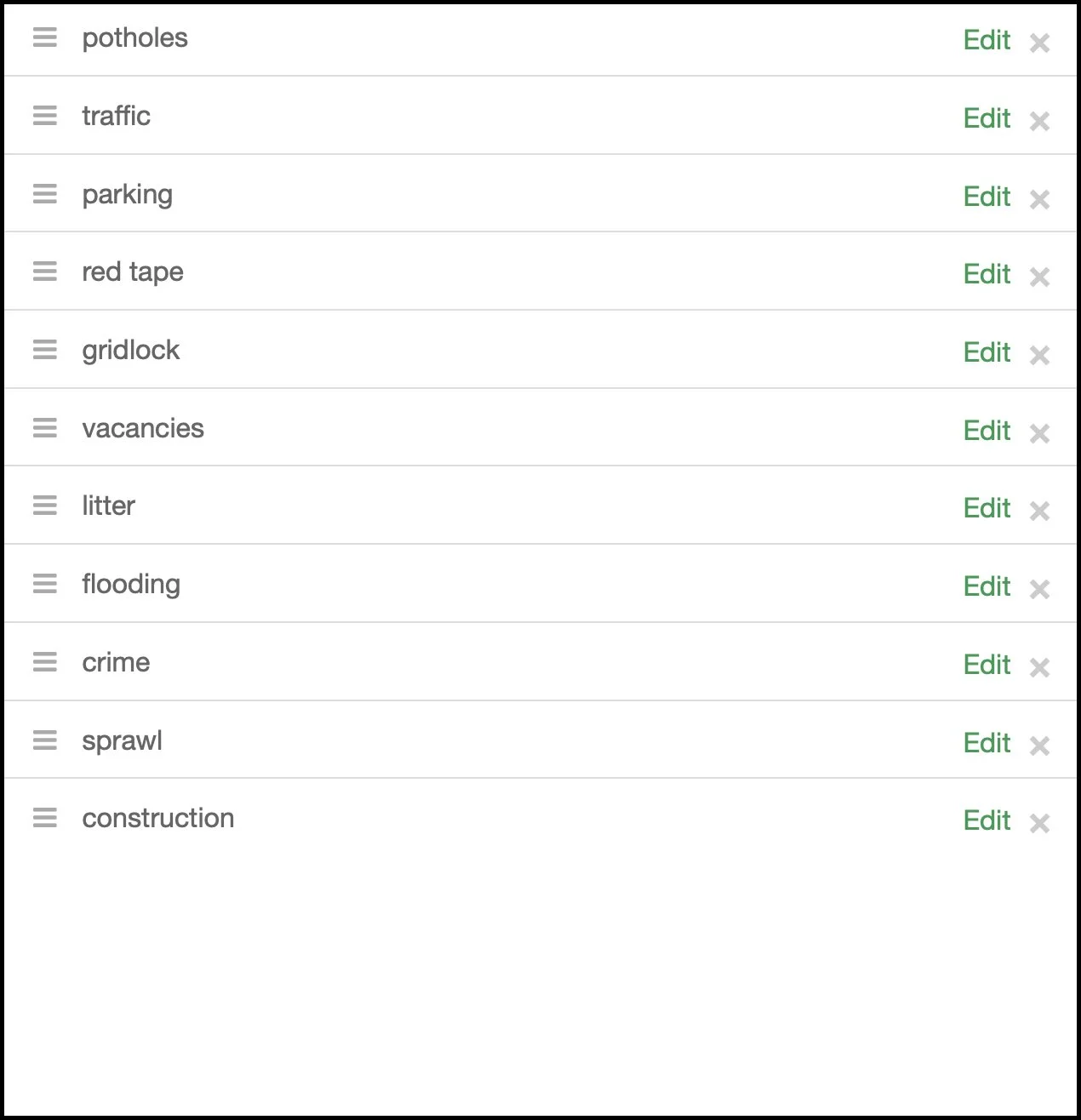
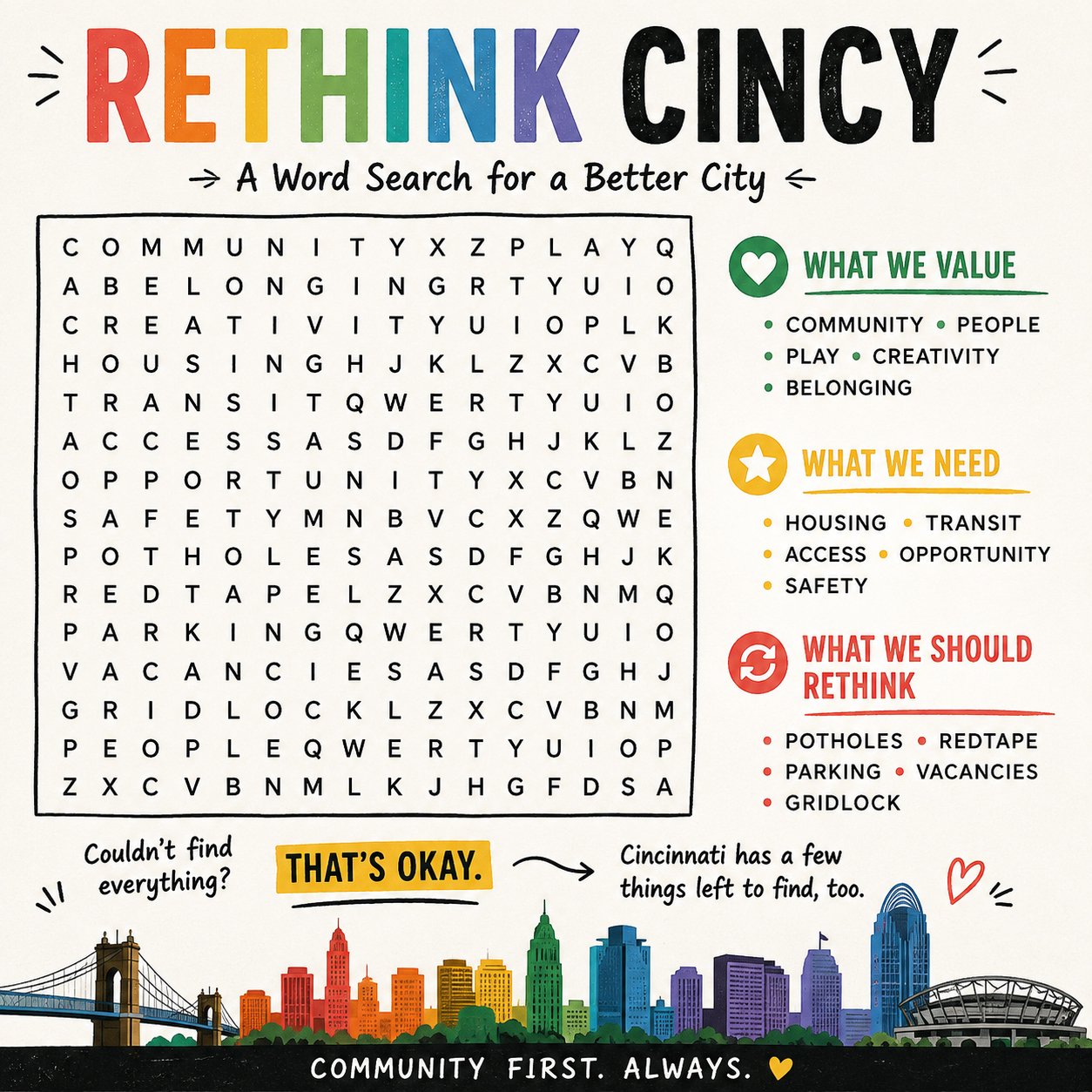
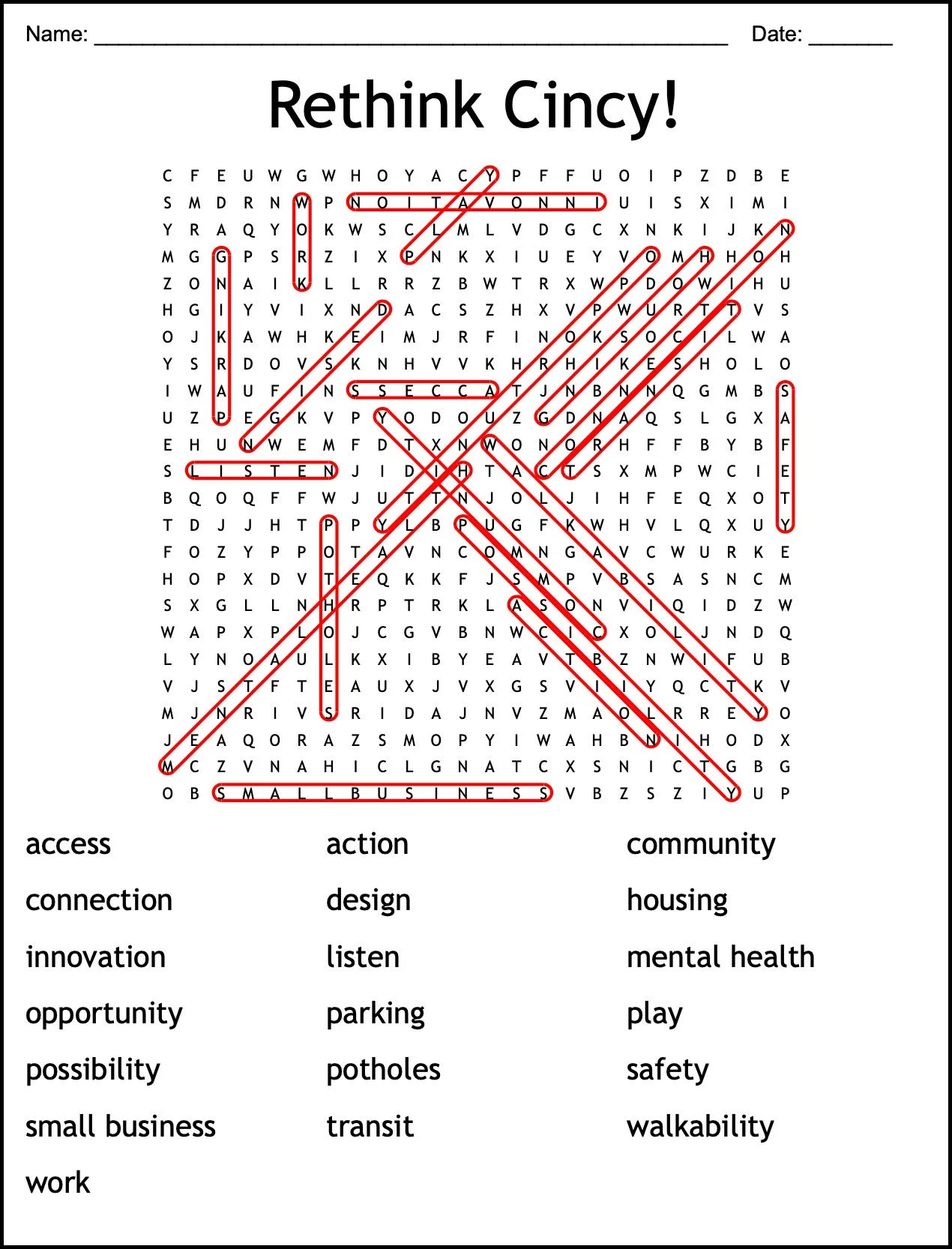
Time for some ideas submitted by Cincinnatians!
I’ve been spending more time paying attention to how Cincinnati City Council actually works. Not just who is on it, but how decisions get made, what perspectives are in the room, and what feels… missing.
This is not a campaign announcement. It is more like a thought experiment.
Where would I fit?
Right now, council has a pretty clear set of roles covered.
There are people grounded in public safety.
People focused on housing and development.
People who understand budgets, policy, and the mechanics of government.
People deeply connected to neighborhoods and community work.
That is a strong foundation. It is serious, practical, and generally aligned.
But it also means something interesting.
A lot of people are solving problems within the same frameworks.
My background is not traditional politics. It is design, teaching, and systems thinking.
I spend my time asking questions like:
Why does this system exist in this form?
Who is it actually working for?
What would this look like if we redesigned it from scratch?
That mindset does not replace policy expertise. It complements it.
If current council has policy mechanics and community grounding, I would be bringing design thinking applied to government.
Not as a buzzword. As a method.
Every room benefits from at least one person who is willing to reframe the problem.
Not louder. Not more extreme. Just… different.
Someone who can say:
What if we are solving the wrong version of this issue?
What would a prototype of a better system look like?
How do we test ideas before locking them into policy?
That is the lane I naturally occupy as a teacher and designer.
And right now, that lane is not heavily represented.
This is not abstract. It would show up in very concrete ways:
Making Policy More Understandable
Government language is often inaccessible by default. I would push for clearer, more visual, more human ways of communicating decisions.
Prototyping Before Committing
Instead of debating ideas endlessly, test them. Pilot programs. Small experiments. Iterate based on real feedback.
Designing for Real People
Not theoretical residents. Actual humans with constraints, habits, and lived experiences. This is second nature in design, less so in policy.
Connecting Systems
Housing, transportation, safety, mental health. These are not separate problems. They are one system. I would consistently push conversations in that direction.
I am not interested in becoming a typical politician.
I am interested in bringing a slightly different energy into the room:
Curious instead of certain.
Creative instead of purely procedural.
Willing to question assumptions without being performative about it.
Still serious. Still grounded. Just… more exploratory.
Cincinnati does not need nine people who think the same way.
It needs people who can challenge each other productively.
Right now, there is a lot of alignment, which creates stability. That matters.
But adding someone who approaches problems differently could make the whole system sharper.
Not by replacing what is there. By expanding it.
If I were on council, I would not be the loudest voice or the most traditional one.
I would be the one asking slightly uncomfortable questions, sketching out alternative approaches, and trying to make city systems make more sense for the people actually living in them.
Which, in a city like Cincinnati, might be exactly the kind of weird that is useful.
If you live in Cincinnati, or just have a creeping sense that “the city” is making decisions somewhere, City Council is where a lot of that actually happens. It is not the loudest part of local government… but it might be the most quietly powerful.
Zoning. Housing. Development deals. Infrastructure. Public safety. This is the room where those things get shaped, negotiated, and occasionally transformed.
There are nine members, all elected citywide. No districts. Everyone represents everyone (which is either very democratic or slightly chaotic depending on your mood).
Terms are short. Things can change quickly. And while elections are technically nonpartisan, the current group is quite politically aligned.
Instead of a roster, it is more useful to understand the roles that tend to show up:
The Stabilizer
Focused on continuity, economic opportunity, and keeping things moving in a steady direction. Often in leadership. Think calm, measured, and deeply plugged in.
The Public Safety Voice
Brings a background connected to policing or safety systems. Tends to prioritize crime reduction, order, and quality of life. Speaks in very concrete terms.
The Systems Thinker
Enamored by infrastructure, environment, and how cities function behind the scenes. Less flashy, more “how does this actually work at scale?”
The Root Cause Advocate
Looks at big issues like safety through housing, healthcare, and food access. Zooms out instead of doubling down. Thinks in systems rather than symptoms.
The Community Developer
Deeply tied to neighborhoods. Focused on housing, growth, and making sure development is not just happening, but happening in the right places.
The Policy Mechanic
Lives in the details. Knows how legislation actually gets written, passed, and implemented. Not always the loudest, but often the one making things real.
The Budget Brain
Focused on money, resource allocation, and financial sustainability. If something costs something, this person is paying attention.
The New Energy
A newer voice bringing a slightly different tone. Often focused on accountability, opportunity, and shaking up expectations just a bit.
The Connector
Comes from nonprofit or community work. Focused on access, trust, and bridging the gap between institutions and people.
Even with different personalities, the same themes keep surfacing:
Housing is the main storyline. Where it goes, who it is for, and how much it costs.
Public safety is still central, with very different ideas about how to approach it.
Neighborhood investment matters, especially outside the urban core.
Infrastructure and sustainability are becoming harder to ignore.
If you understand those four things, you understand most of what is happening.
Right now, there is a lot of alignment. Similar priorities. Similar tone. Similar ways of talking about problems.
That creates stability, which is not nothing.
But it also means there is space. Space for a different framework. Space for design thinking.
Space for someone who approaches city problems a little less like policy checklists and a little more like systems to be reimagined.
City Council is not just procedural. It is directional. It determines what kind of city Cincinnati becomes, who it works for, and how it evolves. And most people are not paying that much attention.
Which is kind of wild.
If nothing else, now you know what kind of people are in the room, even if you do not know their names.
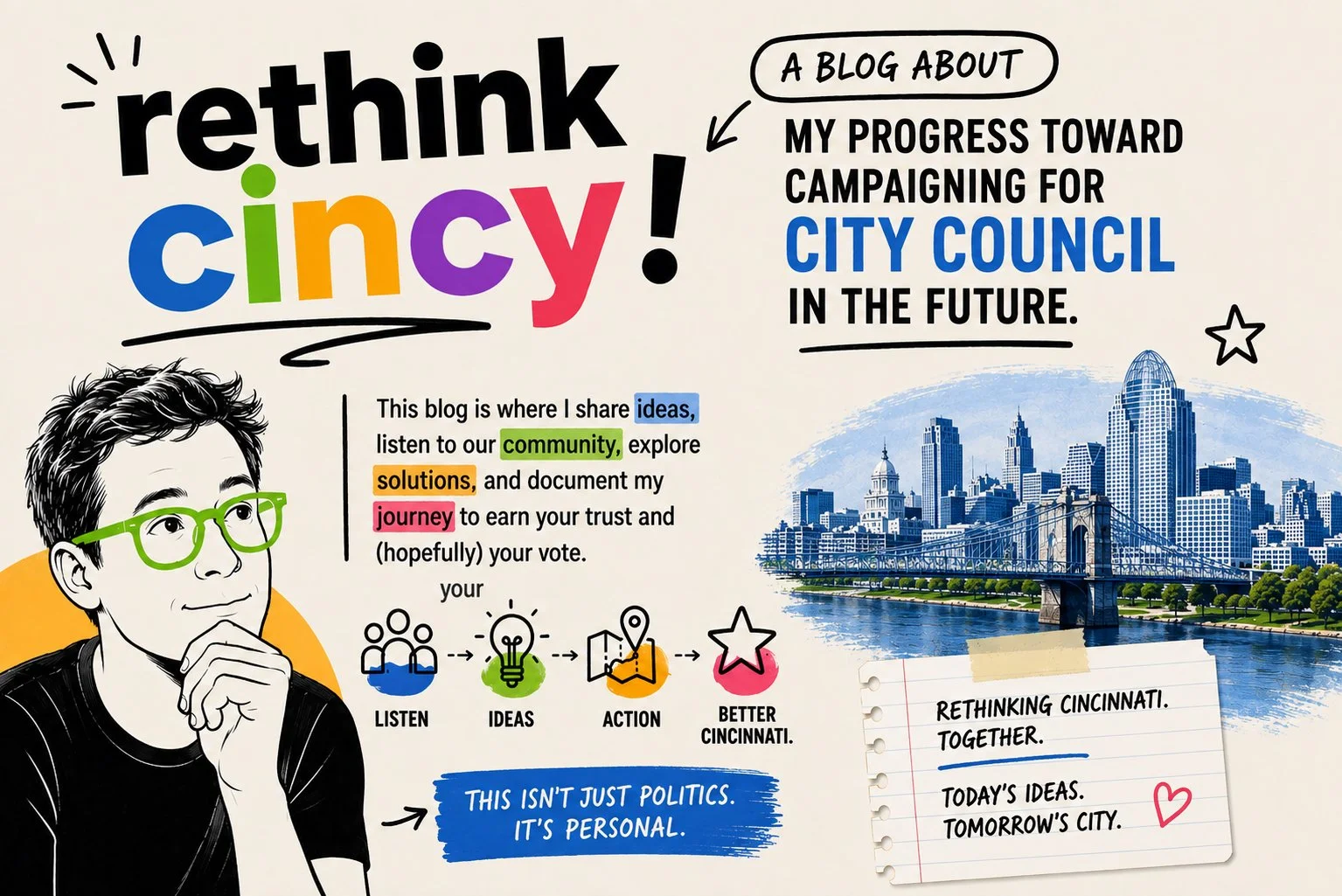
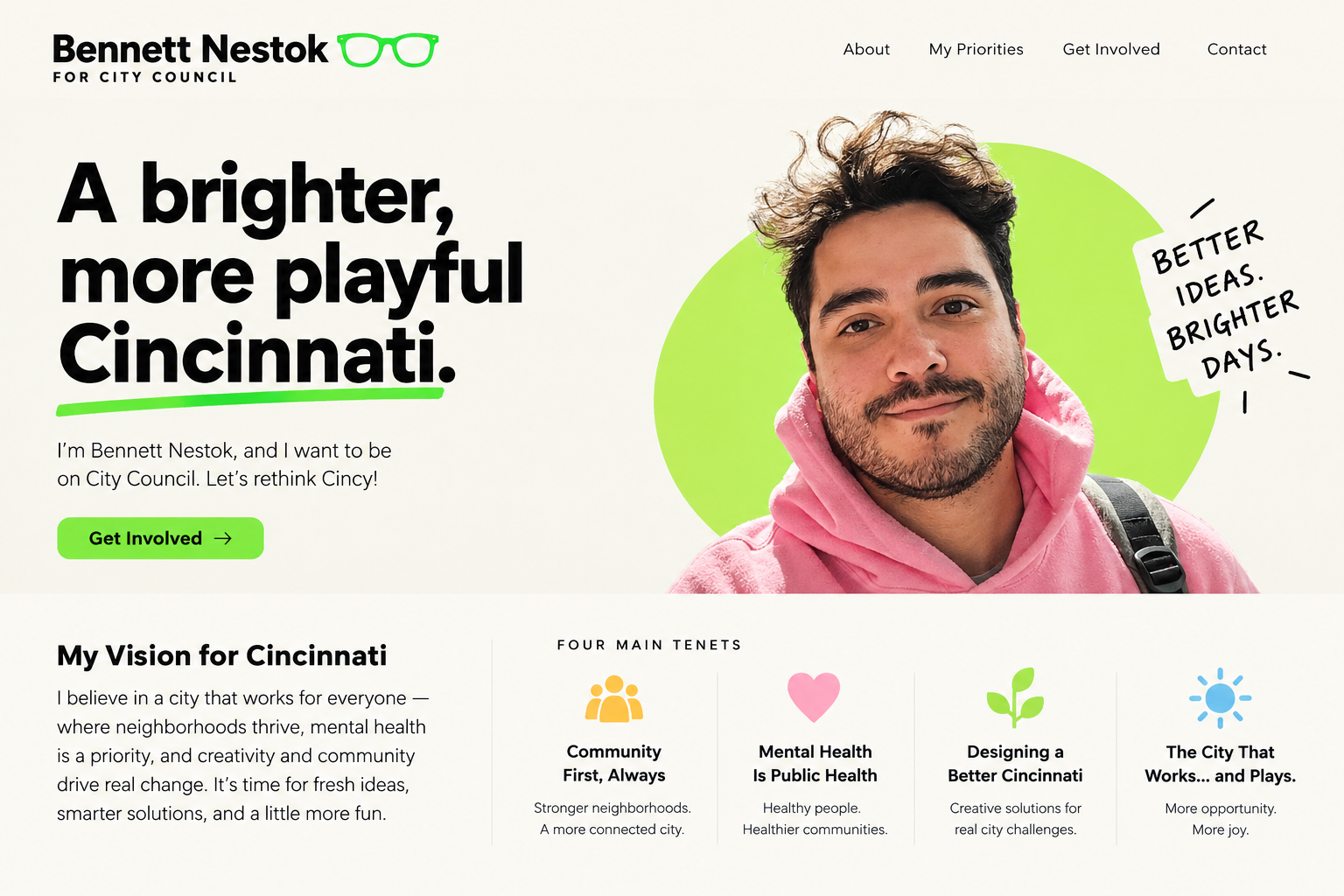
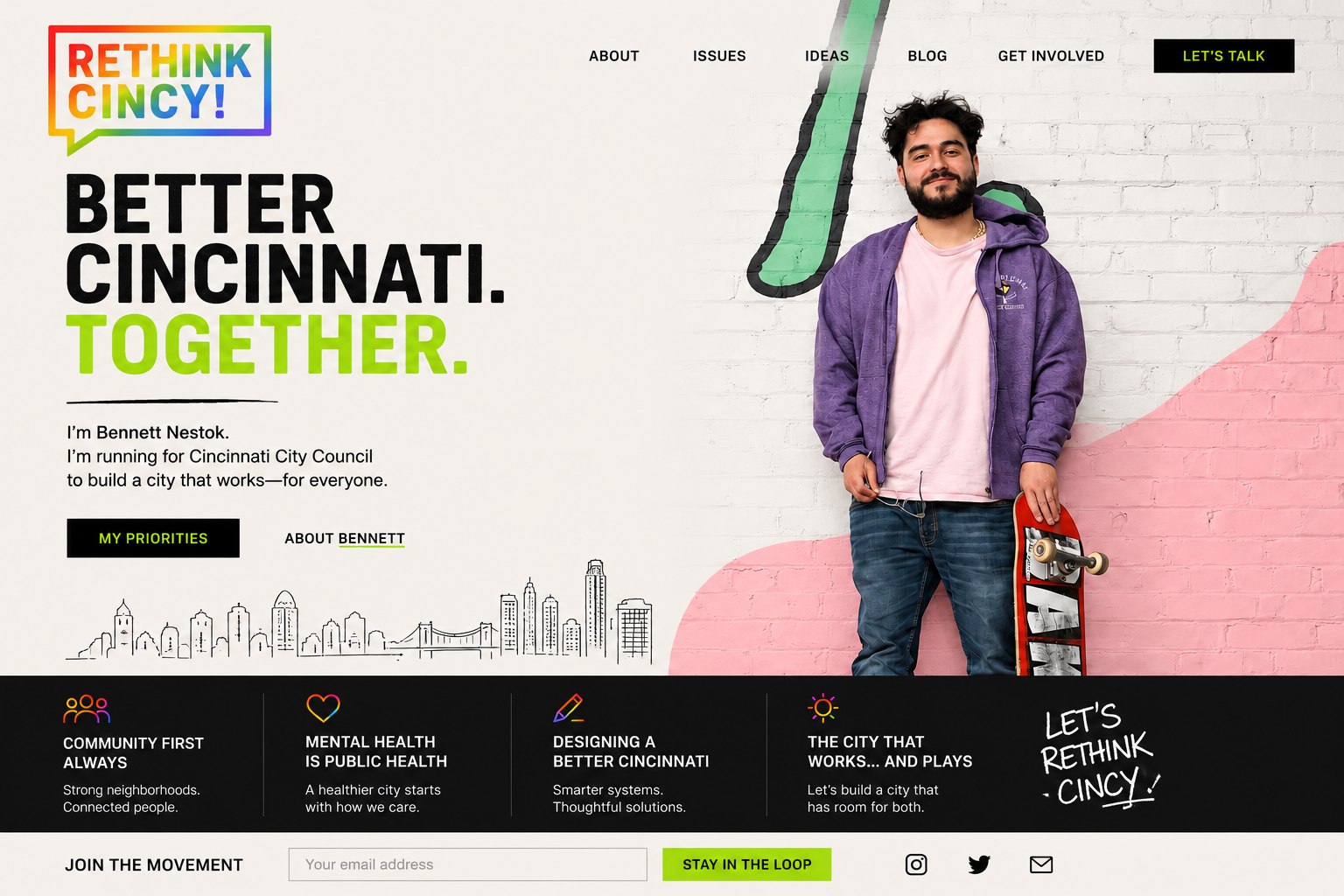
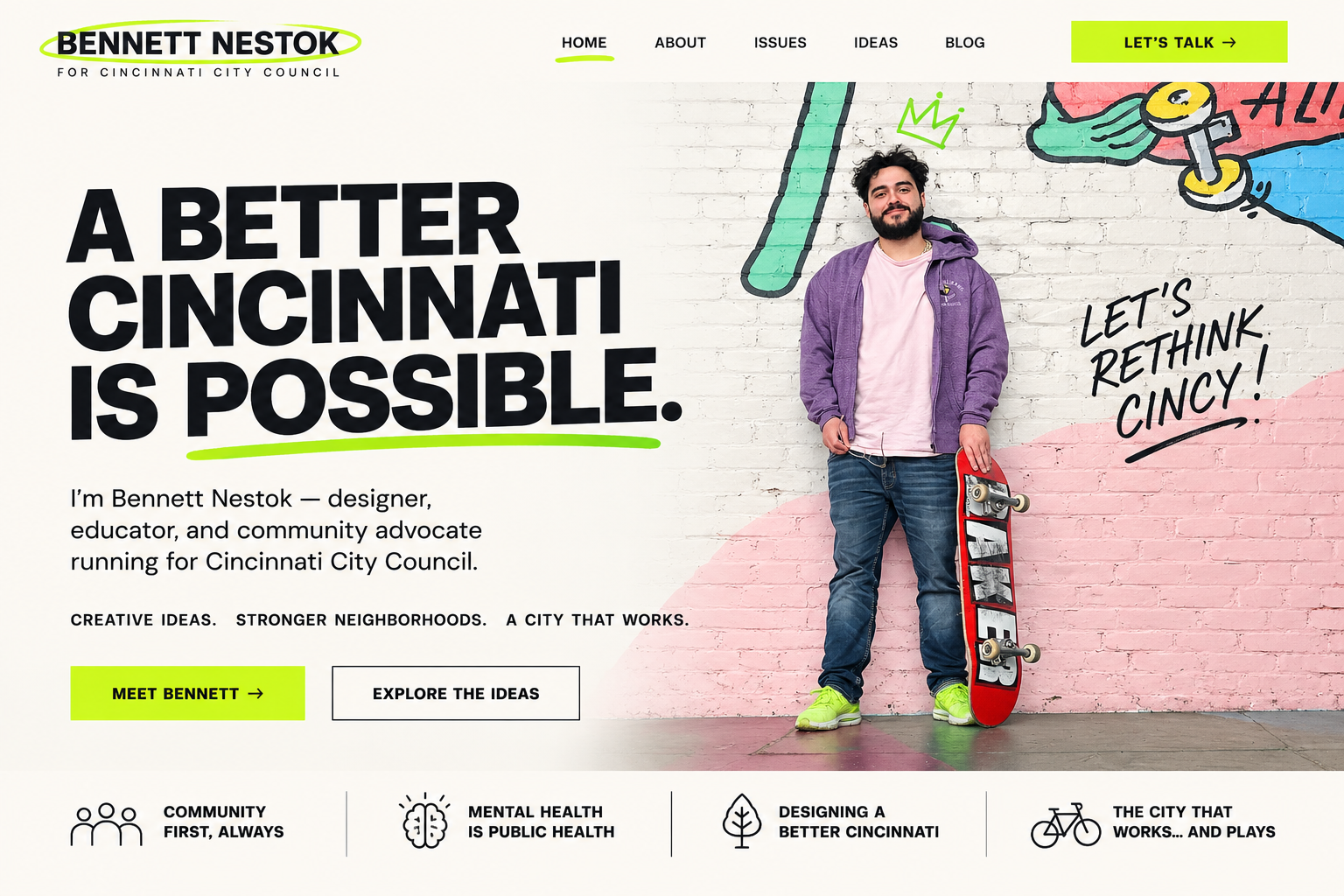
Here is a second pass at a campaign website.
V2b
V2
V1
"Cincy Rinses Me" by Bennett Nestok
Speak to me via splashes
Potholes sunburnt, wet with sorrowful angst
Fill us in, why are you here?
To try that cinnamon… those noodles?
Are we meat to you or oyster crackers designed to be crumbled?
I don't know about you but I love it here
I'll stay for the time being
Dump hot sauce in those pavement cracks
Car tires can handle that spice
Even if they're from out of town
I seriously don't care what high school you attended
I care about you
Thank you for visiting.
Please, please stay
There’s plenty of weather to discuss
SuperB(ennett)
Normal Bennett (because I am, indeed, in it)
Is this even possible?
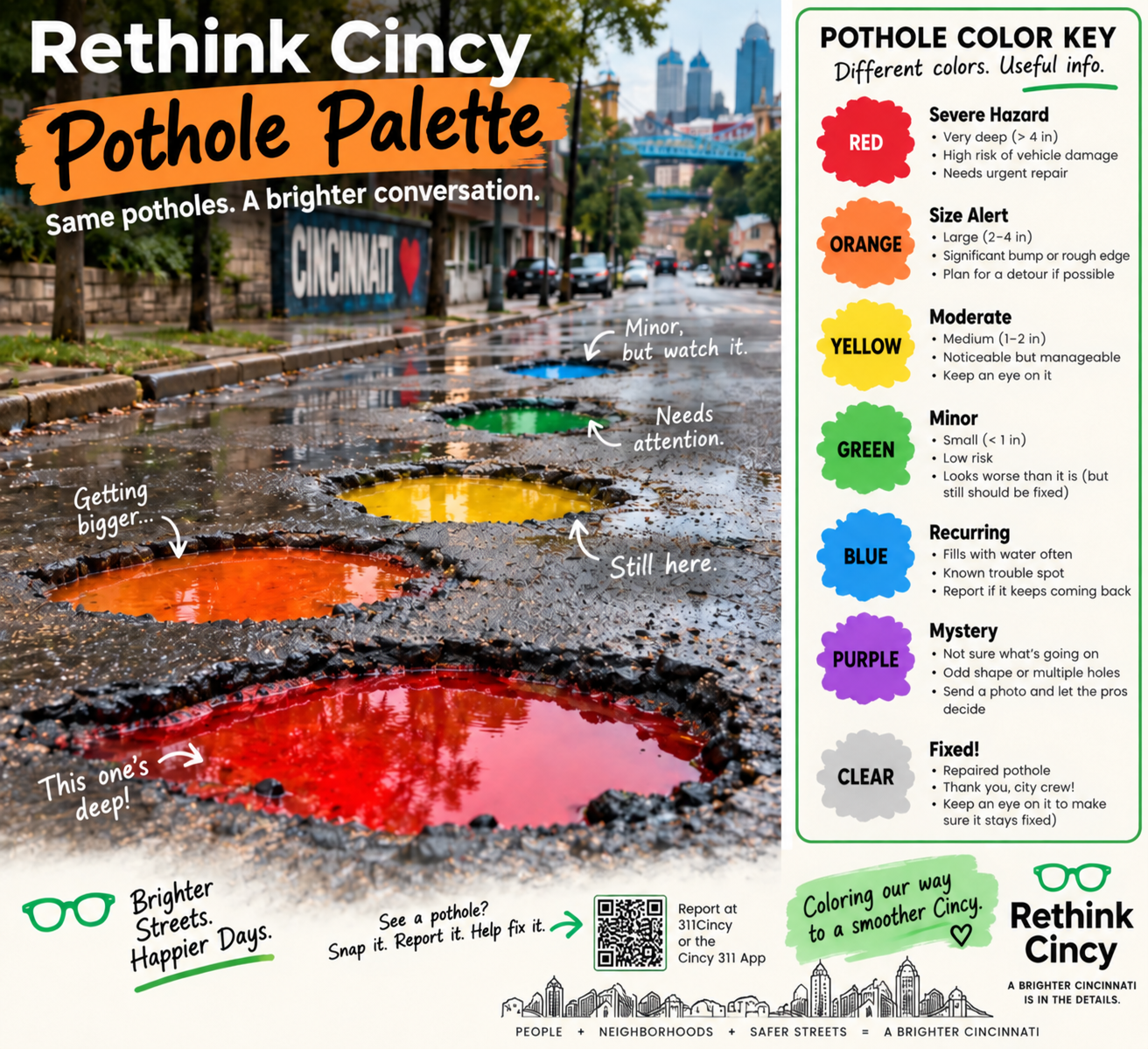
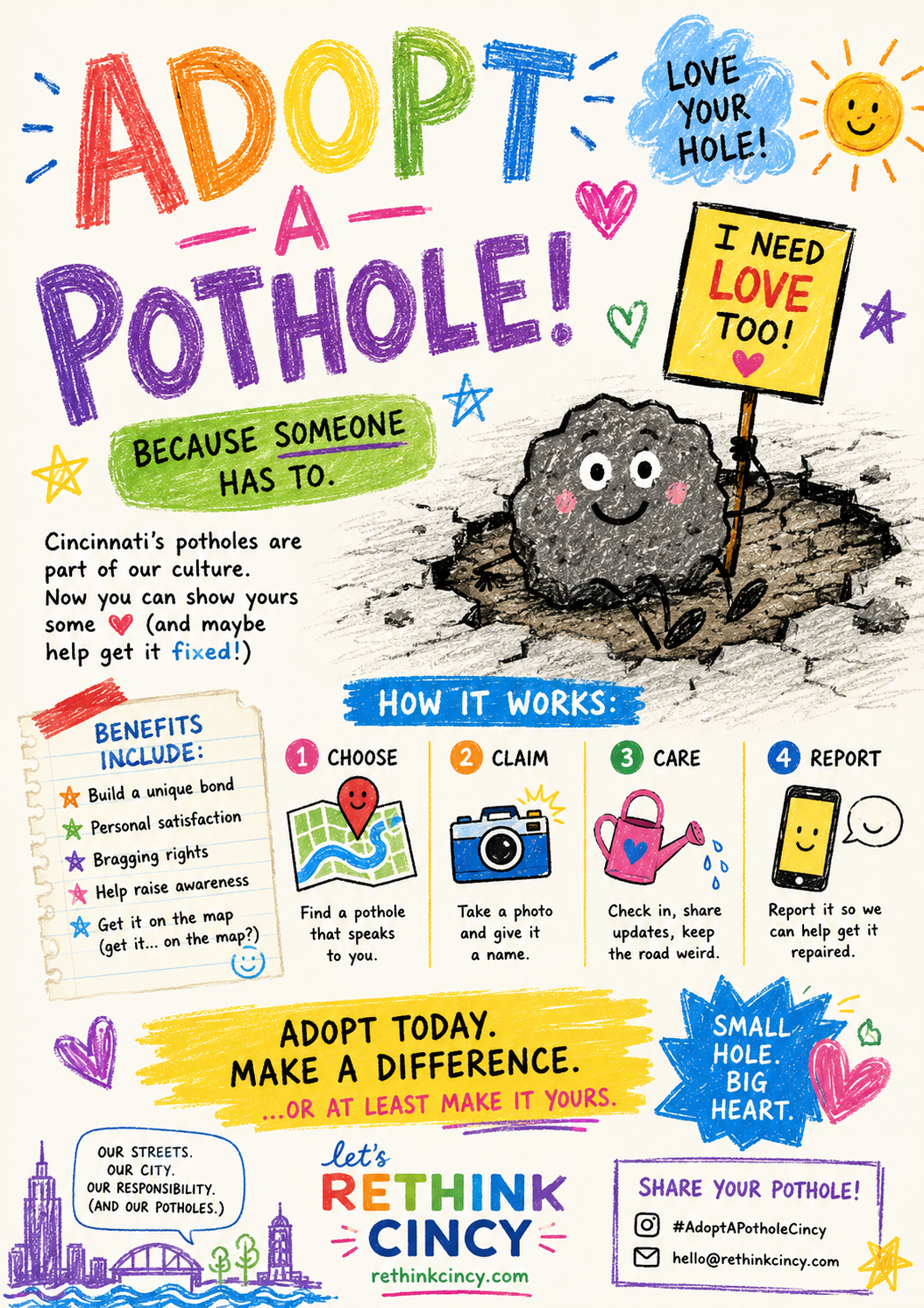
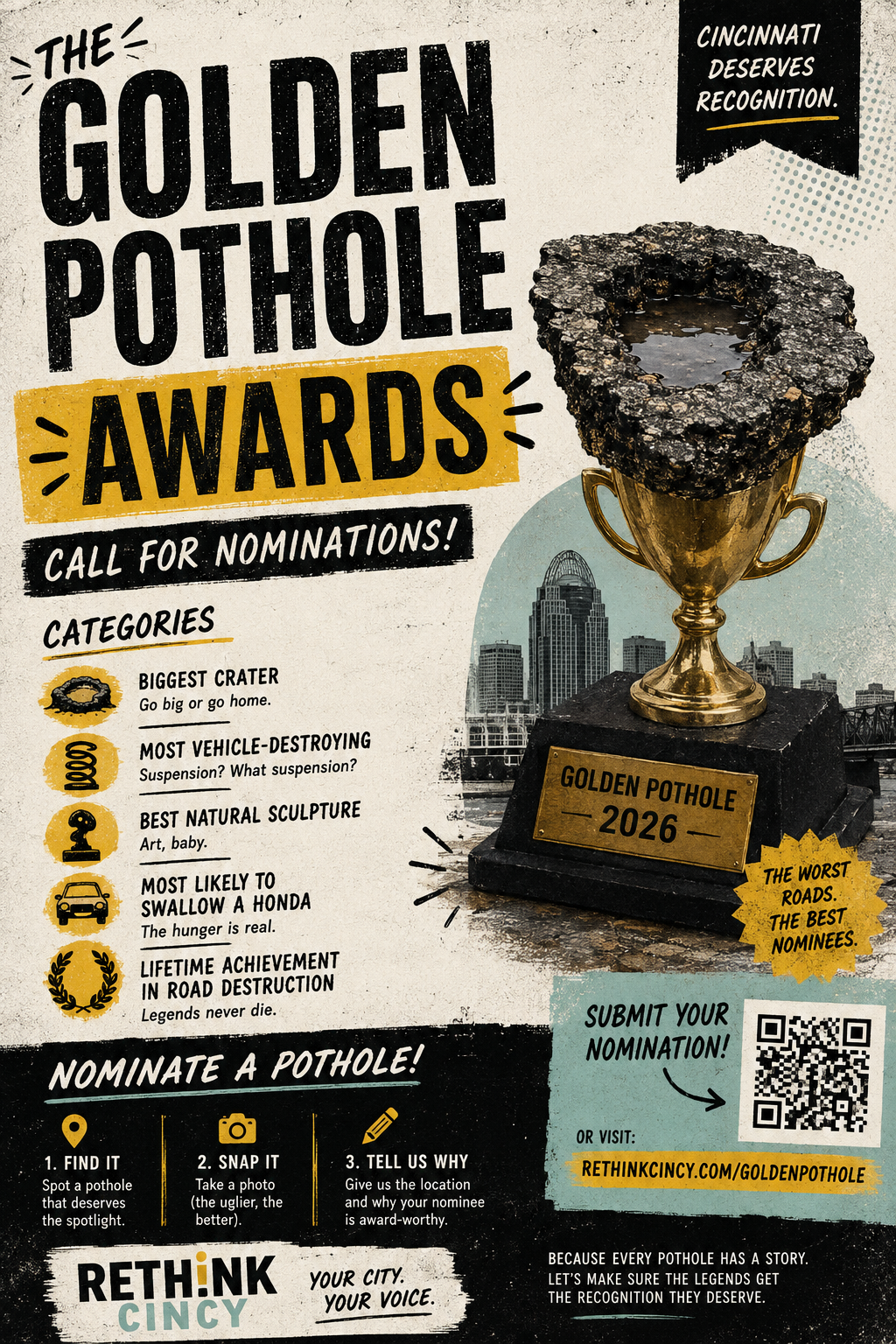
Other cities have done extremely creative things to fix awful roads; why can’t Cincinnati?!
Some of my ideas:
💡What if we put dye or food coloring into pothole puddles on rainy days, to draw attention to the problem in a fun way, which also helps drivers avoid driving over/into them?
💡What if we blocked off certain extremely problematic roads and threw a block party on each of these roads until locals came together to ideate and solve the problem creatively? The city could provide sticky notes and whiteboards and writing/drawing utensils. Just a thought!
💡What if we had volunteers pack them with (extremely dense) dirt during nighttime (less drive-ish) hours?
Potholes suck. I wish more people understood the beauty of Domino's Paving for Pizza.
I have a complicated relationship with the Southwest Ohio Regional Transit Authority. I want to love it. I want to be the guy who says, “Just take the bus!”
But when the arrival time shifts like a horoscope and the transfer requires a minor pilgrimage, it stops being transit and starts being endurance theater.
We cannot be a serious city if getting across town feels like a side quest.
I have aged emotionally on the Brent Spence Bridge.
I have contemplated my career, my love life, and my cholesterol levels sitting in that traffic. I have seen conceptual renderings that were so beautiful they should’ve been in a gallery.
The only thing that has not changed is the traffic.
At this point, the bridge is less infrastructure and more a regional coping mechanism.
Every spring, the streets exfoliate.
I respect texture in design. I do not respect my suspension system filing a complaint.
If my Interaction Design students shipped something this unstable, we’d call it a beta. Cincinnati streets have been in beta for decades.
Affordable.
Available.
In Cincinnati.
Pick two.
I want development. I also want the artist who makes the murals and the nurse who works third shift to still live here. A city that prices out its weirdos loses its soul. And I say that as someone proudly weird.
Opening your reassessment shouldn’t feel like a haunted house experience.
We deserve clarity. We deserve predictability. We deserve to not find out our budget exploded because a spreadsheet somewhere decided we’re “thriving.”
Here’s my radical position: I want people to feel safe walking home. I also want them treated with dignity.
Those are not opposing ideas. They are the bare minimum.
The fact that we treat this like a philosophical cage match exhausts me.
The Banks is electric when the jerseys are out.
But I don’t want our identity to depend on whether someone hit a home run. I want the riverfront to feel alive on a gray Wednesday when no one is performing for ESPN.
We are more than a highlight reel.
We recruit brilliant students to the University of Cincinnati. We educate them. We inspire them.
Then they leave because opportunity density and housing math make more sense somewhere else.
That’s not a talent problem. That’s a systems design problem. And I’m allergic to bad systems.
City. County. Townships. Kentucky.
We solve regional problems like roommates arguing over who bought the paper towels.
Traffic, housing, transit, workforce — these do not respect municipal boundaries. Our collaboration should reflect that.
If I hear this one more time, I will gently flip a table.
Cities are living organisms. If they stop evolving, they calcify.
I do not want to get into public life to maintain calcification. I want to get into it to redesign things that don’t work — thoughtfully, yes — but boldly enough that people actually feel the difference in their daily lives.
First pass at a campaign webpage! Can’t wait for V2.
First pass! (Needs some aesthetics finesse…)
I am not interested in politics as performance. Well… actually, I kind of am. Mostly, though, I am interested in systems that work.
As a designer and professor, I spend my life diagnosing broken systems, asking uncomfortable questions, and rebuilding things so that real people can use them. That is leadership. Design thinking is not theory. It is applied problem solving, and cities desperately need more of it.
Cincinnati does not need louder leaders. It needs clearer ones. Leaders who prototype instead of posture. Leaders who test small, fail fast, and iterate publicly. We should treat civic ideas the way we treat good design. Launch early. Measure impact. Improve continuously.
Imagine a city that:
Runs small neighborhood pilot programs before scaling policy citywide
Uses public dashboards so residents can see what is working and what is not
Invites artists, designers, and technologists into civic problem solving, not just developers and consultants
Treats accessibility, mental health, and dignity as baseline requirements, not afterthoughts
I have led classrooms, creative teams, and community projects. I have managed budgets, personalities, deadlines, and expectations. I know how institutions stall and how thoughtful pressure moves them forward. That experience matters, whether you are running a studio or a city department.
I love Cincinnati because it is practical, scrappy, and weird in the best way. We care about neighborhoods. We argue about chili. We show up. That same energy can power a more imaginative, human-centered city.
Creative leadership is not about being flashy. It is about clarity, curiosity, and follow-through. If I ever step into public office, it will be to redesign how things work, reduce friction in everyday life, and prove that thoughtful, experimental leadership belongs right here in The 'Nati.
This is fascinating. I wonder how many of Cincy’s streetlights could be revamped to decrease light pollution? Would this even be a viable thing to pursue, as a civic servant? How much would any improvements cost? Just a thought.
Image courtesy of ArchDaily
Reminder:
Please go to my Contact page if you want to submit ideas on how to make Cincinnati even better.
Got this in a fortune cookie—let’s hope so!